Last set, last song, last call. The applause dies quickly. House lights snap on. Someone calls out, “Great set, guys” from somewhere near the door. Onstage, the work begins. Cases, cables, cymbals, and one lowly drum kit waiting to be dismantled piece by piece. In the hollow sound of an empty room, a drummer packs up, hands moving on autopilot, mind running the night back, already thinking about setting it all up again next week.

For this Beyond the Gig conversation, I sat down with two local drummers who have lived every version of that moment: Patrick (Pat) Moore and Keith Farny. Generations apart but they speak the same language; time, feel, discipline, and yes, survival. Both are phenomenal drummers. Both are educators. Both have sustained long marriages, no small thing in a life built around late nights and constant motion. While music is at the center of their lives, it only works because of everything that surrounds it, home, partnership, and the commitment to show up for both.
Don't Mess with the Drummer - He Beats Things for a Living

Pat Moore graduated North High School in 1968. He began playing drums at age eleven and playing professionally by age twelve. With a little help from his dad and the head of the union, Pat was able to join the union at an age when most kids were still asking permission to stay up late.
His first “real” gigs were not glamorous. Riverfront shows with his brother, who played guitar, passing the hat, and saving every dollar to put toward a drum set. Before long, he was playing clubs like The Owls, The Eagles, The Moose, and eventually, a long run at The Three Coins. Back then the rooms were demanding and run by characters who taught you fast whether you were going to last.
Today, you can catch Pat playing with several bands including The Sidemen Trio, Scott Mercer Trio, The Tom Drury Trio, and The Limited Inventory Big Band.
Pat also continues to teach private drum lessons at Moore Guitars (Previously Moore Music). He opened Moore Music in 1976 and soon it became far more than a music store. For decades, it was the music hub for lessons, mentorship, working musicians, and future professionals. Students passed through those doors who would go on to tour the world, study with masters, and build careers that started right here. When Pat sold Moore Music in 2012, he wasn’t closing a chapter, he was leaving a legacy.
Pat’s passion for music is surpassed only by his love for his wife, Sharon. “Yep, we’ll be celebrating our fifty‑sixth wedding anniversary in December,” he says with a smile. A proud father of two grown daughters, Sherissa and Shenae, Pat is also a devoted grandfather to four grandchildren, and his smile grows even wider when he shares that his oldest granddaughter recently graduated from IU Law School.
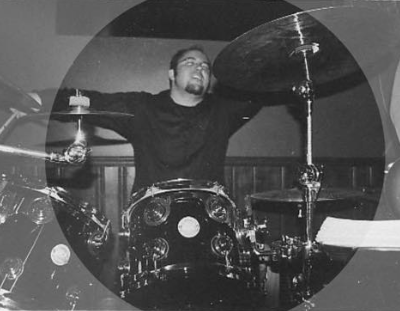
Keith Farny graduated from F.J. Reitz High School in 1996, and University of Evansville in 2001. Keith’s first real "drum" moment came later, not in a club, but a coffee shop in the late ’90s. He and some friends formed a jazz trio in high school and played Friday nights for free coffee and snacks. No paycheck. No guarantees. Just the feeling that this was something bigger than a hobby.
For the past twenty‑five years, Keith has served as a band director with the Evansville Vanderburgh School Corporation. In addition, he is an active presence in the local music scene, performing with the Evansville Symphonic Band, subs for the Evansville Philharmonic Orchestra, and is the founder of the Keith Farny Jazz Collective. He and his wife, Jenny, have been married for ten years and share their home with two beloved fur babies, a Labradoodle, and a Pug.

As our conversation continued, it became clear that musicians don’t simply play music, they live and breathe it. Drumming is internal, it isn't something you can switch on and off. As Keith puts it, “It’s a reflex. Whether I’m sitting at a table, a desk, or even tapping on the dashboard of the car, I’m instinctively drumming out a rhythm without even realizing it. It drives my wife crazy.”
There is a certain romance in the early years when the only thing that matters is the next gig. Audiences see the performance, but rarely see the years leading up to it, or the choices that come after. That first room that made playing drums feel real. The night when passion ran headfirst into exhaustion. Over time, music becomes more than something you love; it becomes how you make a living. For most local musicians, the reality of a day job is what helps make the numbers work.
During our conversation, I discovered that every musician has a story they can’t tell without smiling, and another they can’t tell without pausing first. A first gig, a bad gig, a turning point gig. Somewhere between hauling gear through back doors and counting out tips at the end of the night, the romance from those early years gives way to reality.
Pat recognized that shift early on, playing six nights a week at the Executive Inn. It was steady work and reliable money. With a first child, a mortgage, and growing responsibilities, somewhere along the way drumming stopped being just something he did and became how he lived.
Keith’s moment came later, as he tried to balance life as a band director with late‑night gigs. Teaching all day and playing late into the night was exhausting. He remembers one gig in particular. It was around 2:30 a.m., there were only a few people there, and they weren’t even listening to the music. At a certain point, loving music isn’t enough to outrun burnout.

Pat and Keith’s stories aren’t unique. They aren’t about fame or fantasy; they’re about staying power. Why do musicians keep showing up? Why do some stop? How pay structures, venues, audiences, and respect matter far more than most people realize. There’s always that moment in a musician’s life, the almost -quit night happens when music becomes a job, and when it almost isn’t.
Pat and Keith spoke openly about their almost‑quit moments, the kind every musician faces at some point.
Pat still remembers the night he finally had enough, another side gig, another “Tennessee Waltz,” the same songs he felt like he’d been playing forever. Something in him snapped. He told the band leader never to call him again, walked out, and muttered under his breath, “That’s it, I’m done.” Except he wasn’t. You can't quit something that’s wired into you. Instead, you figure out how to move forward.
Keith hit his wall around 2012. Too many gigs. Too much noise. Too little balance. Somewhere between full days of teaching and late‑night sets, the work began to feel hollow. What pulled him back wasn’t another booking, but a reset, one that led him back to jazz and reminded him why he picked up the sticks in the first place. That reset became the Keith Farny Jazz Collective.
On the other side of those moments, both came to the same realization; not every gig is worth it. A gig stops being worth it the moment the music turns into wallpaper. Playing has to make sense. There’s a difference between background noise and a room that’s actually listening. When a band is shoved into a corner, told to keep it down, and treated as atmosphere, the exchange breaks down.
The gigs that last are the ones where the connection is real. People show up to listen. Musicians stretch, mix things up, take chances, have fun, and stay engaged. Time passes quickly when that exchange is happening. That’s when it all feels worth it.
“Life is more than paying bills and dying,” Keith says. “There’s a psychological benefit to being in a room where something real is happening, shared in real time.”

Moving on, the conversation drifted toward the myths, and assumptions about drummers. Ideas that rarely reflect the demands of the role. It is no secret that drummers are often misunderstood, and reduced to stereotypes that often overlook the skill, awareness, and responsibility that is required to anchor a band.
Pat points out one of the oldest stereotypes about drummers, that they're meant to be felt, not heard. He is quick to note that Gene Krupa shattered that perception, bringing the drums out of the background and into the spotlight. Before Krupa, drummers were often seen as less skilled, with jazz percussion relegated to the backbeat and the sidelines. "You don't hear it often anymore, but there are times," he laughs.
Keith brushes off the old stereotype that drummers lack intelligence. The job demands the opposite. Keeping time, shaping dynamics, and steering the emotional direction of a song, all of that happens in real time. “Also, for the record,” he grins, “a great band with a terrible drummer does not exist.”

A slight pause for refills of coffee, water and soda, our discussion continued. It became clear that while the love of music hasn’t changed, the business surrounding it has....dramatically!
What hasn’t changed is the work behind the music. The drive time, loading, setup, soundcheck (if there is one), the cost of gear and the maintenance that never really stops. That has always been part of the gig. The desire to play hasn’t faded, and the audience’s appetite for live music is still there.
What has changed is everything around it. Audiences live differently now. Schedules are busier, late nights are less common, and attention is shaped by short clips, constant scrolling, and endless digital distractions. Venues are adjusting too, balancing staffing shortages, insurance, rent, and declining alcohol sales. Added to that is a new expectation, content creation for social media. Whether musicians like it or not, promotion is now part of the work. Some groups have embraced social media and do it well; others are still finding their footing. It's hard to add "one more thing" when a musician is already spending so many hours honing their craft, working day gigs, and balancing their home life. Truth is, there are limits to how much constant self‑promotion can be layered on top. Once again, it comes down to balance.
Pat came up in a time when playing music was supported by more rooms, steady gigs, union scale, and clear expectations. You could play until midnight, pack up, and walk down the street to catch another band still playing. Today, sadly, there are fewer venues, and more musicians willing to play for little, or even nothing, just to be seen.
Keith sees the same shift. Fewer venues. Tighter margins. Changing audience habits. Cover bands still fill rooms, while jazz often struggles when a cover charge is introduced. At every level, venues are making hard calculations to justify live music, while musicians try to adapt alongside them. Everyone is trying to survive.
Pat sums it up this way: a rock guitarist can play three chords in front of ten thousand people, while a jazz guitarist can play ten thousand chords in front of three people.

The more we talked, the more a few simple truths emerged about why some gigs work and some don't. It's rarely about the playing. More often, it's about losing sight of who you're playing for. When bands turn inward, repeating the same approach night after night and ignoring the room in front of them, the disconnect builds slowly. People stop listening. Eventually, they stop showing up.
That awareness is something Keith comes back to often. He recommends The Creative Act by Rick Rubin, which focuses on creating from awareness rather than approval, not changing who you are as an artist, but paying close attention to when something lands and when it doesn't. It’s a balance every band leader has to learn.
That balance shows up most clearly in how a set is shaped. Original songs matter, but so does placement. One or two originals, placed thoughtfully, can invite people in. Seven in a row can push them out. Quality original music still connects, but it has to be curated, not dumped on a room. That isn’t about compromising who you are as an artist; it’s about understanding the room.
It is important to note that keeping local music alive isn’t just up to the people on stage. For fans, the answer is simple: Show up. Every night out is a choice between the couch, a restaurant, a club, a movie, or a concert. Live music shouldn’t be confined to one type of venue or one kind of room. Audience demand can make it happen. In an economy where people are weary, live music remains one of the few places where you can still vote with both your dollars and your presence.
Live music doesn’t disappear all at once. It fades quietly. One room stops booking bands. One venue shortens sets. One musician decides it’s not worth it anymore. One student never gets their first real gig.
Teaching Beyond Measure
For drummers who also teach, the passion doesn’t stop at the kit. Both Pat and Keith see teaching as an extension of the music itself. It builds discipline, confidence, and focus, but more than anything, it teaches resilience. They agree that failure, more than success, is where the real lessons are often learned.

Pat teaches private drum instruction. "Teaching," he says, "is a passion. Students learn, practice and perfect their skills. I love that there is always that one moment where everything clicks, and right then and there you know you’re doing what you’re supposed to be doing,”
Teaching is more than notes, reading and technique, drumming is about "feel". "Feel" is harder to understand. It can’t be taught in a technical sense, but it can be discussed, observed, and absorbed. He encourages students to listen closely to the emotion, the intention, and the way a drummer shapes a song. That awareness is what separates playing notes from making music.
He goes on to explain that there are other lessons not found in the books. One of those lessons is learning to keep ego in check. Pat is direct about it. Nothing will derail a musician, or a career faster. It’s a lesson he learned firsthand. Early in his career, Pat remembers a jazz gig, where he was playing straight four on the bass drum, the way he had been taught. The band leader stopped him and said he wanted the bass drum used only for kicks and accents. Later that night, a well‑known local drummer sat in, and yes, he played straight four. The band leader turned and smiled at him. Pat couldn't believe it. Pat was frustrated. After the gig, he asked him about it. The band leader responded, “I tell you things because I see potential in you. You can still learn. On the other hand, he is stuck in his ways and can't learn.” Then came the words that stopped me cold, “Don’t worry,” he said. “I’ll never tell you anything again.”
Those words floored me. I have never forgotten that lesson. The higher the level, the bigger the stage, the greater the competition, the easier it is to let ego take over. Keeping your ego in check is something he warns his students about constantly. You can't let it control you.
Of course, taking drum lessons fuels the dream of pursuing music professionally. While Pat wants every student to achieve their goals, he doesn’t sugarcoat the reality either. He talks openly about the time commitment, honing skills, competition, cost of equipment, hours of practice, life on the road, and the challenge of paying bills while staying creative. You can achieve anything if you work hard enough at it, but it's always better to go in with your eyes wide open.

From a band director’s perspective, Keith sees the other side of things. For him, the challenge is breaking through the noise. Students today are growing up surrounded by instant gratification, social media, and the illusion that once you “make it,” the money and success automatically follow.
His students often ask about becoming a band director. They love being in band and want that experience to continue. Keith explains that the job of being a band director is more than rehearsals, concerts, helping students improve, and sharing a love of music. Success as a band director is often found behind the scenes, building confidence in the shy kid, the student that stayed in school because band gave them a sense of belonging, or the graduate who comes back years later and says, “Band got me through.”
Much of being a band director happens outside of music itself. From managing behavior, motivation, and confidence to family expectations, budgets, and fundraising. There is rarely a day that ends when the bell rings. Concerts, contests, marching band, fundraisers, equipment checks, travel paperwork, and after-school rehearsals that often stretch well into the evening. You become a repair coordinator when someone’s valve sticks, a reed is missing, a drum head breaks, uniforms need sorted, chairs need moved, and microphones and/or PA systems suddenly fail…five minutes before a performance. Although enrollment numbers keep a music program alive, potential is what gives it purpose.
Keith goes on to share that he was a shy, anxious kid. He tried wrestling, but it was drumming that gave him confidence. Learning an instrument teaches grit. He advises students to keep pushing through to the next level even when you want to quit. Just keep going and power through. And whatever you do, don’t quit.
Drums and martial arts are his outlets. Keith recommends the book Groove Essentials by Tommy Igo as a must read for every drummer. Keith likes to use Instagram drummers as an example to prove instant gratification rarely reflects the years of work behind real skill.

Pat and Keith share the belief that music only survives when it’s lived honestly. On stage that means showing up prepared, present, and willing to listen to the room, to the moment, to the people who came to hear something real. In the lesson room, it means passing along more than technique, it means teaching discipline, humility, curiosity, and the understanding that progress takes time.
Staying in music isn’t about chasing perfection or avoiding failure. It’s about grit, learning when to push, when to reset, and when to redefine what success looks like. Performing and teaching aren’t separate paths; they’re extensions of the same philosophy. You play with intention. You teach with honesty. And you keep going because the love of drumming still matters.
From the Editor: That wraps up this edition of Beyond the Gig. I want to thank Pat Moore and Keith Farny for their openness in sharing what happens Beyond the Gig, the nights that test you, the lessons that stay with you, and the quiet resolve it takes to continue choosing to play.
Until Next Time
Sip, Laugh, Repeat

Add comment
Comments